
Gentrification as image production
The incessant work of semio-capital extracting value from social production

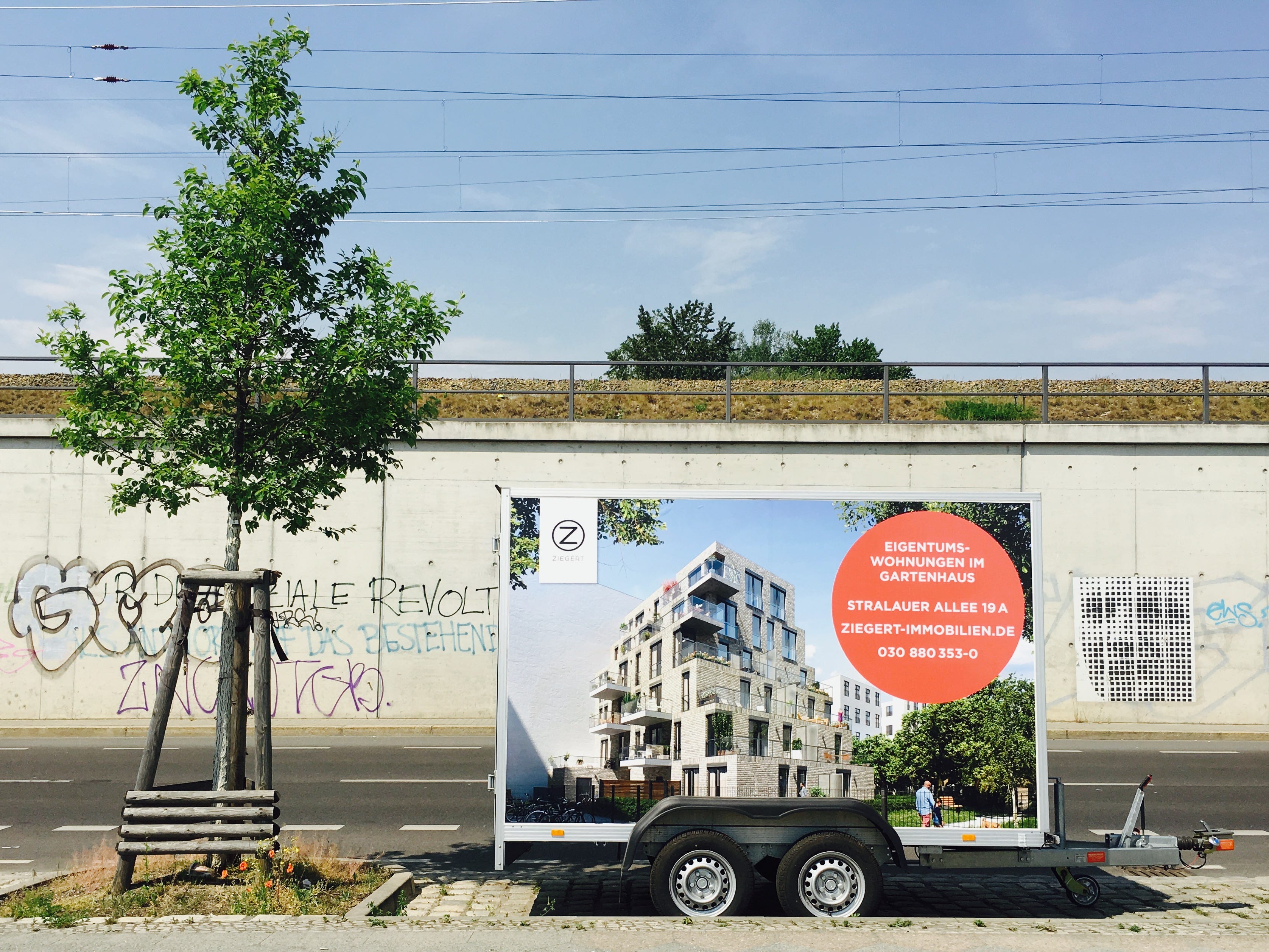
The increasingly essential role of image production in urban economies shapes significantly spatial transformation and is at the core of the urban regeneration discourse and strategies. It has a specific influx in the touristification, disneyfication, festivalisation and the consequent gentrification and displacement dynamics affecting worldwide urban territories. I would argue that the gentrification discourse that so central has been in the critique of spatial transformation of the last fifty years can be effectively framed within an image production epistemology. Since the story of the East Village conflicts in the 1980s that Neil Smith brilliantly analysed through the rent gap theory,1 the gentrification process becomes a pattern that will repeat on a planetary scale in substantially comparable ways in the most diverse urban contexts. From working-class neighbourhoods and disused manufacturing areas to the centres of historic cities, to the regeneration of modernist suburbs, and even hamlets in inland areas and rural areas, new ‘territorial hype’ diverts attention to places potentially subject to profitable redevelopment processes, setting in motion transformation dynamics that respond to a typical pattern. The mechanism is renewed in different forms and cases, with ever new pretexts and opportunities to exploit cycles of disinvestment and reinvestment, while new social actors find themselves elected to the role of pioneers. To the condition of abandonment, disinvestment and degradation of a territory, which may have different origins, corresponds the opening of an imaginary of conquest and regeneration - the ‘frontier’, in Neil Smith's formulation - which triggers a reaction quintessentially based on the capacity to regenerate the image of the place. Under these circumstances, those who are naturally favoured in the role of pioneers are figures with professional capacities in the creative sphere, though not exclusively artists and gallerists as in the East Village case. The activation of creative potential may stem from a variety of everyday practices, with various degree of social and political awareness - such as specific contextual sensitivities, entrepreneurial capacities or even mere survivalist impulses. A complex layering of instinctive practices and enunciations unfolding in public space has the effect of creating an overall arrangement of the social environment that allows for the implantation and cultivation of creative imaginaries.

At the same time, the deposition and sedimentation of images in the public sphere—material, mental, and increasingly in a parallel a-spatial digital dimension—alter the overall representation of a place and facilitate its revitalization in social, cultural, and economic terms. The final phase, that of capitalisation, is thus served up on a silver platter: at which point the surplus produced is appropriated by a few subjects, who generally have very little to do with the creative process or the concrete practice of regeneration, but are simply the holders of the rights to the rent. They in many cases have had to do nothing more than wait for the time to come to collect, while those who regenerated the place through their daily practices are often expelled. Here emerges the central contradiction inherent in the immaterial nature of images, which are the product of social processes, whose value is determined by the collective gaze and recognition, which hover, impress, and precipitate in space through their ethereal and irrepressible property, but significantly condition the value extraction potential of places. At the end of the process, the wall on which a piece of graffiti is deposited, the gallery or production centre in which a cultural product takes shape, but also the residential buildings favourably located around the regenerated context, the most diverse businesses not necessarily connected to cultural economies, and even the digital platforms and circuits of extraction of the economies of attention closely imbricated with the territories in a process of mutual valorisation, belong to, or are controlled by, a few, determined, and increasingly concentrated actors. They possess all the privileges and means to extract profit in total disregard of the multitude of subjects and practices that have generated the increase in value. The limelight of the visible is left to social actors invested with the role of unleashing creativity, generating spectacle, producing innovation, enterprise, culture. But if we look hard enough to see where the ‘purse strings’ lead, the actual control over the resulting profit remains in the hands of a few determined actors, who care little about visibility, or operate with a low profile, essentially exercising the right to rent, administering the ownership of real estate and, increasingly, of technological infrastructures and digital platforms.

And therein lies the unresolved knot of gentrification, which presumably requires us to take some distance from the local dimension of the neighbourhood, from the specific hot frontier that drives the process at that moment, and instead observe the global connections and determinants, the almost universal regulatory mechanisms that govern the process of image distribution and establish the power relations at the basis of value extraction. It is a phenomenon of planetary scale, which - however violently it may emerge in specific contexts and moments - finds its origin in the overall, fluid sphere of circulation of sign-images2, using the incisive term that Baudrillard coined before its virality through the digital network could even be imagined.
Smith, Neil. 1996. The New Urban Frontier: Gentrification and the Revanchist City. Routledge
Baudrillard, Jean. 1996. The System of Objets, Verso.